
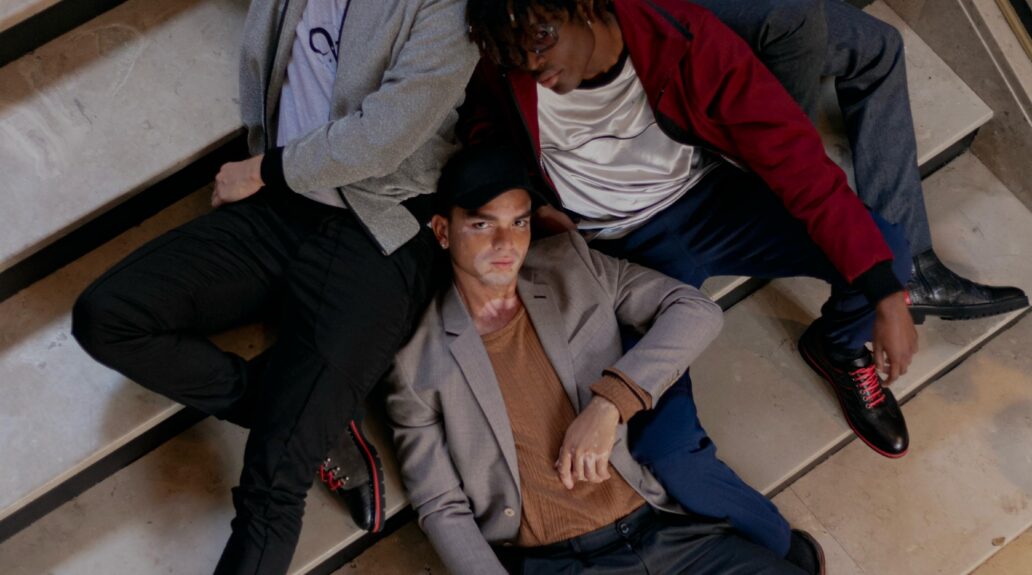
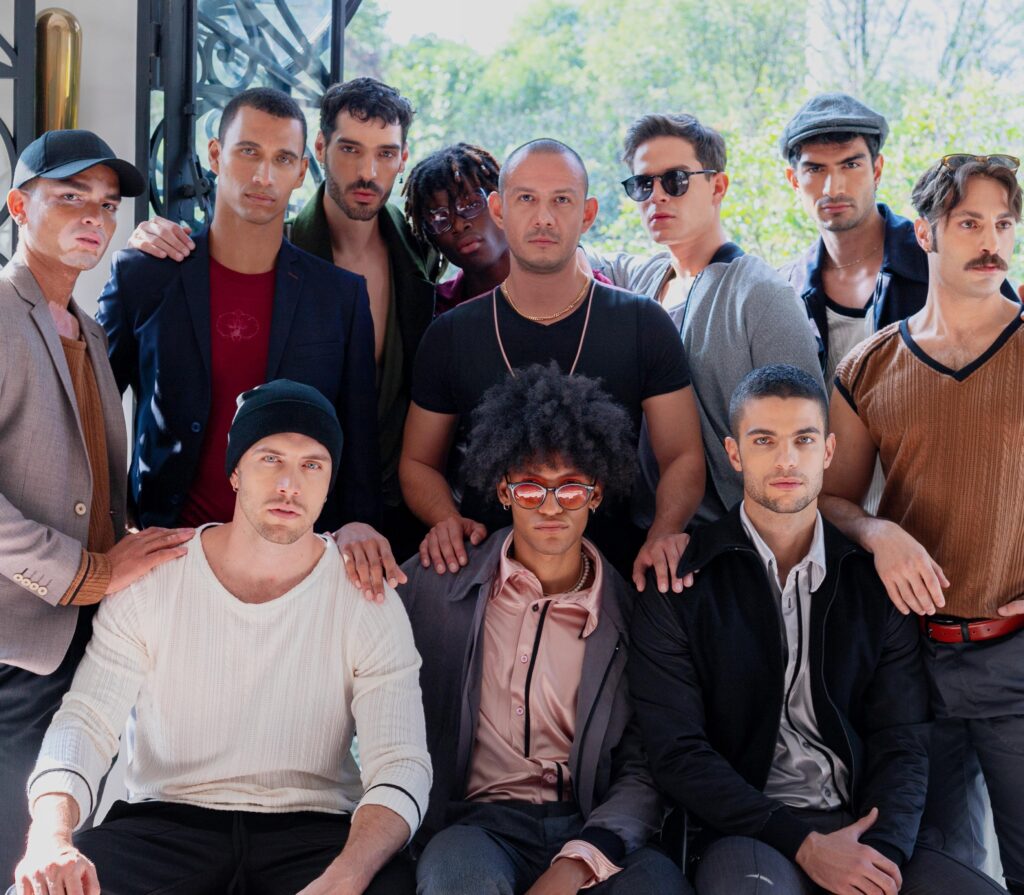
This week I had the pleasure of meeting Mexican menswear designer Galo Bertin in person for the first time. I had attended some of his runway shows during Fashion Week a few years ago, but I never had the chance to sit down and interview him.
As we discussed the idea behind this interview, we both agreed on something that I find particularly interesting: when we talk about fashion in Mexico, there is still very little conversation and information surrounding menswear.
This became the starting point for our conversation—not only to look back at Galo Bertin’s career and his contribution to Mexican menswear, but also to explore how men’s fashion in Mexico has evolved, where it stands today, and what the future might look like.
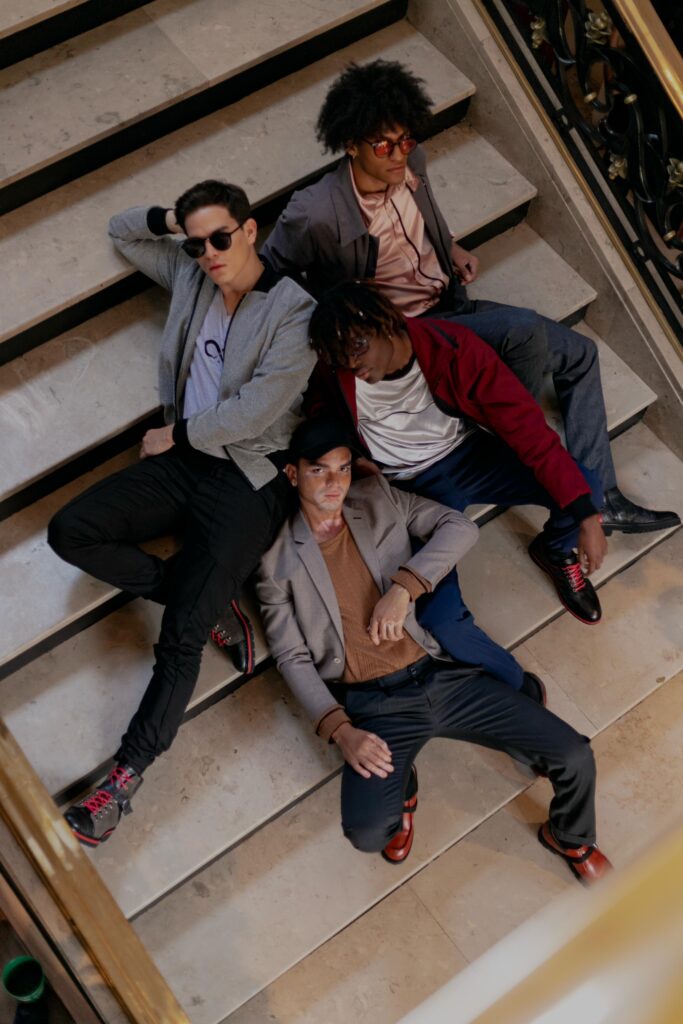
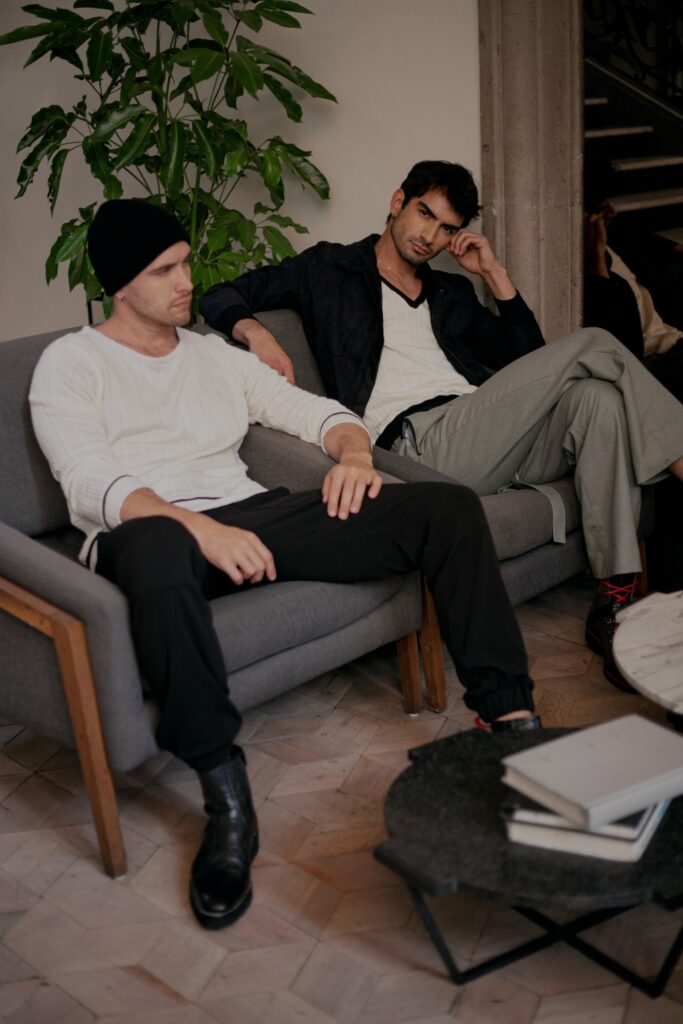
Beca: Your background is in industrial design. How did your journey into fashion begin, and what ultimately led you to focus specifically on menswear?
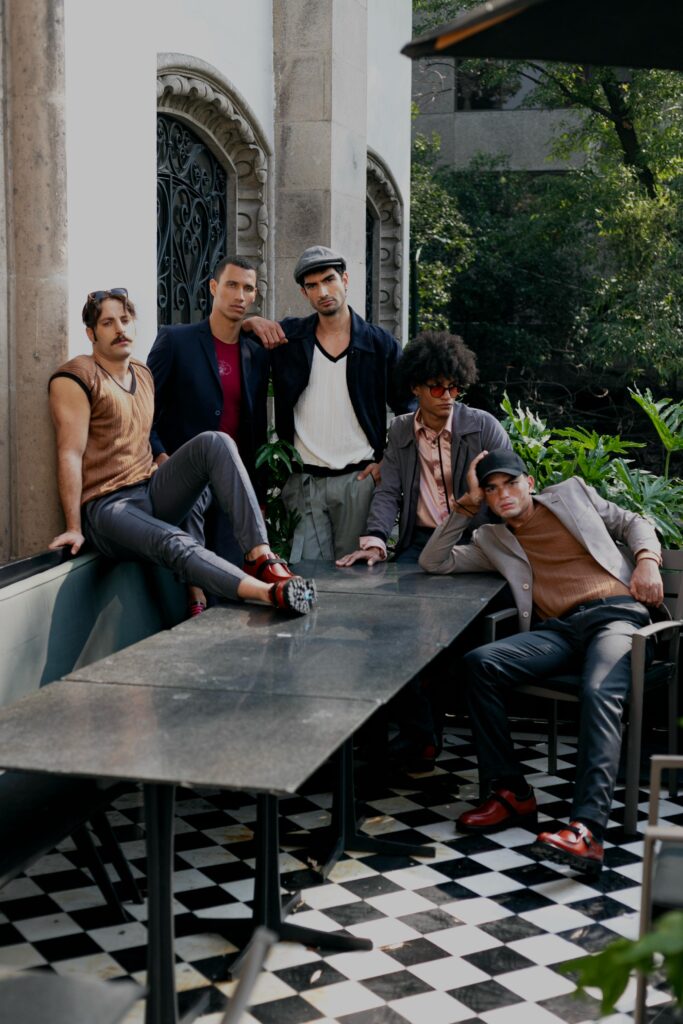
Galo: I always say it was fate.
I studied industrial design, and after winning a design competition, I had the opportunity to pursue a postgraduate program at IED Madrid. I ended up studying fashion business because it was far more theoretical and, at the time, less demanding than continuing down the industrial design path.
When I returned to Mexico, the head of my program told me something that completely changed my life: “Find the best moment of your day and turn it into a lifestyle.”
That was when I realized that one of my favorite moments of the day was getting dressed. But it was never just about choosing clothes; it was the moment when I decided which version of myself I wanted the world to see.
I think that was the real beginning of my relationship with menswear: understanding clothing as a tool to build identity, confidence, and presence. That was the beginning of everything.
Beca: When you launched Galo Bertin, menswear had a much smaller presence within the Mexican fashion industry. What did you see in the market at that time that made you believe there was an opportunity to create something different?
Galo: The truth is, it wasn’t something I had planned strategically. I simply started creating, designing, and building my brand, and it began growing much faster than I ever expected.
It was only years later that I realized GALO BERTÍN had arrived at exactly the right time. Menswear in Mexico still had so much room to evolve, and in many ways, we found a space that was almost completely unexplored.
The brand was very well received because it brought together two things that, at the time, didn’t always coexist: elegance and creativity. We wanted men to look sophisticated without feeling predictable, and I think that’s where much of the opportunity came from.
Beca: We often talk about Mexican fashion through womenswear, while menswear receives much less attention. Why do you think men’s fashion still has a smaller presence and visibility in Mexico?
Galo: It’s a question I ask myself constantly. I think there is a very strong cultural component behind it, and after almost fourteen years in the industry, I can say that the market is definitely changing—but very slowly.
I have my own theory, although I would never claim it to be an absolute truth. Mexico still doesn’t have the same deeply rooted fashion culture that exists in other countries; we are not necessarily a market that naturally follows trends. On top of that, for a long time, machismo positioned fashion as something superficial and, more specifically, feminine—as if caring about clothing, style or personal image belonged exclusively to women.
As a result, many men grew up with a very rigid idea of what a man is “supposed” to look like, with very little incentive to step outside that mold.
I do think younger generations are changing this. There is more freedom, more curiosity and less fear of experimenting, but there is still a very deeply rooted stereotype of masculinity within Mexican culture.
Beca: Throughout your career, how have you seen the Mexican male consumer evolve? Are men today more willing to experiment with fashion, personal style, color and different silhouettes than when you started?
Galo: Fourteen years ago, some men considered wearing a pink shirt or T-shirt almost transgressive. Looking back now, it makes me laugh. It was simply a color, but at the time it said a lot about the limitations surrounding masculinity and clothing.
Today, men are definitely much more willing to take risks with color, silhouettes and, most importantly, with the types of garments they incorporate into their wardrobes. A shirt and a blazer are no longer automatically the only options a man considers when he wants to dress well.
I think more and more men are realizing that fashion can be a tool for expressing personality, identity and authenticity. To me, that shift is far more important than any particular trend.
Beca: The “Galo Bertin man” has become an important part of the identity of the brand. Who is he today, and how has that man changed since you first created the label?
Galo: You’re right—the “GALO BERTÍN man” is probably my greatest source of inspiration.
I always say that he is basically a version of myself on steroids. He is a character that allows me to tell stories about his life, his desires, his contradictions and the different stages he goes through through collections and narratives that other men can also identify with.
He has evolved over the years, but his essence remains the same. He is built around ideas that, to me, define a man who knows who he is—or who is working toward becoming that version of himself: elegance, confidence, presence, values, sensuality, ambition and, of course, sex.
I’m not interested in creating a perfect man. I’m interested in creating a man with personality.
Beca: Your work combines classic tailoring with a contemporary approach to menswear. How do you find the balance between timeless elegance and the constant evolution of fashion?
Galo: That has probably been one of the greatest challenges of my entire career. Finding the balance between elegance, functionality and design is something that still keeps me awake at night.
I think one reason I’ve been able to maintain that balance is because I remain deeply involved in the creative process. I never design just for the sake of designing. Before I begin any collection, I need three elements: an emotion, a period in time and a story.
I like to research those elements and completely immerse myself in them until I understand them. For me, it isn’t enough to say, “This collection is inspired by a summer in the 1980s.” That means nothing. A summer in Mexico City in 1985 is completely different from a summer on the Italian coast in 1989.
That is where I find the magic—in the history, the music, the society, the context and the emotions of that particular moment. Then I translate all of that into garments that can live in the present.
Beca: After more than a decade building your own brand, what has been the biggest challenge of creating and sustaining an independent menswear label in Mexico?
Galo: For me, the biggest challenge has always been divided into two parts: fashion itself and yourself.
Fashion is a demanding, jealous and incredibly unforgiving industry. If you enter it expecting fame and fortune simply because you are creative, you will probably be disappointed. There is an enormous amount of daily work behind building a brand. The market also changes constantly, so you have to learn how to read those shifts and surf them without losing your identity.
Then there is the personal challenge, which people talk about far less.
Nobody really tells you how much you may have to sacrifice to play in the big leagues. You have to work tremendously hard on yourself. You have to educate yourself, study, learn something new every day and understand that there will be moments when both your mind and your body are pushed to their limits.
You also have to learn to protect your physical and mental health. There will be incredible days and terrible ones. There will be wonderful reviews, and there will be people who hate your work.
Building a brand also means learning how to emotionally survive all of that.
Beca: Galo Bertin has also taken Mexican menswear to international fashion platforms. What have those experiences taught you about how Mexican design is perceived outside the country?
Galo: My experience has been that anything coming from Mexico tends to be received with a great deal of interest and warmth.
I’ve had the opportunity to present my brand in different countries throughout Latin America, and I have always been welcomed with open arms. There is a very positive perception of Mexican talent and of the passion we bring to what we create.
Mexico has an enormous creative identity. We have history, craftsmanship, culture, color and a very particular way of telling stories.
Sometimes I feel that people abroad recognize and celebrate that talent more than we do ourselves. I wish Mexicans viewed Mexican fashion with the same pride and excitement that I often see from audiences outside the country.
Beca: Your brand now works with a zero-stock model, producing garments once they are purchased. How has this model changed the way you think about designing, production and the future of a fashion business?
Galo: From a business perspective, it has been one of the best decisions we’ve made.
The zero-stock model has allowed us to be much more responsible with production while also giving us much greater control over our investment in inventory. It improved our cash flow and strengthened our value proposition at the same time.
Today, a GALO BERTÍN garment doesn’t just have design behind it; in many ways, it begins being produced specifically for you the moment you make your purchase.
I believe models like this can help reduce some of the environmental impact created by the fashion industry. In our case, waste has decreased significantly compared with previous years, and there is also something very rewarding for the entire team in knowing that we are trying to build a more conscious way of producing fashion.
Beca: Looking at Mexican fashion today, what do you believe is still missing when it comes to menswear? What opportunities do you see for the next generation of Mexican designers?
Galo:There is still so much left to build.
We need more platforms for emerging talent, more retail spaces for Mexican brands, more media willing to talk about our designers, and better tools and support for entrepreneurs trying to build businesses within this industry. I could probably keep listing things forever.
But strangely enough, that is also what makes it exciting.
Everything that doesn’t exist yet represents an opportunity to create it. I believe it is the responsibility of both those of us who have already spent years in the industry and the new generations to build those spaces.
We also have tools today that didn’t exist when I started. Social media, for example, has the potential to democratize the industry tremendously if we learn how to use it properly. We no longer necessarily have to wait for someone to give us a platform—we can build one ourselves.
Beca: What is next for Galo Bertin? Where would you like to take the brand—and Mexican menswear—in the years ahead?
Galo: Throughout 2026, much of my energy has been focused on giving structure to the project I want to develop over the next decade: the consolidation of GRUPO GB.
After going through burnout in 2025 and recovering from what was a very difficult year, we are now working intensely to restart many of the projects we had to put on hold, while also rethinking them from a much stronger foundation.
GALO BERTÍN also celebrates its 15th anniversary in 2027, so we are preparing an entire strategy around that milestone: new products, launche
At this point in my life, I’m very clear about one thing: my purpose is to create. And, more importantly, to make sure that the things I create—whether they are fashion, stories, businesses or entirely new projects—can somehow leave an impact on the world I move through.